Pediatric Development: Why pediatric development matters for
Named clinical case: Maya, age 18 months, is admitted with dehydration from gastroenteritis. She cries when her parent leaves, says only a few words, and throws a cup when frustrated. The nurse must decide what is expected, what teaching to give, and whether any delays need referral.
Figure: Clinical judgment framework and named case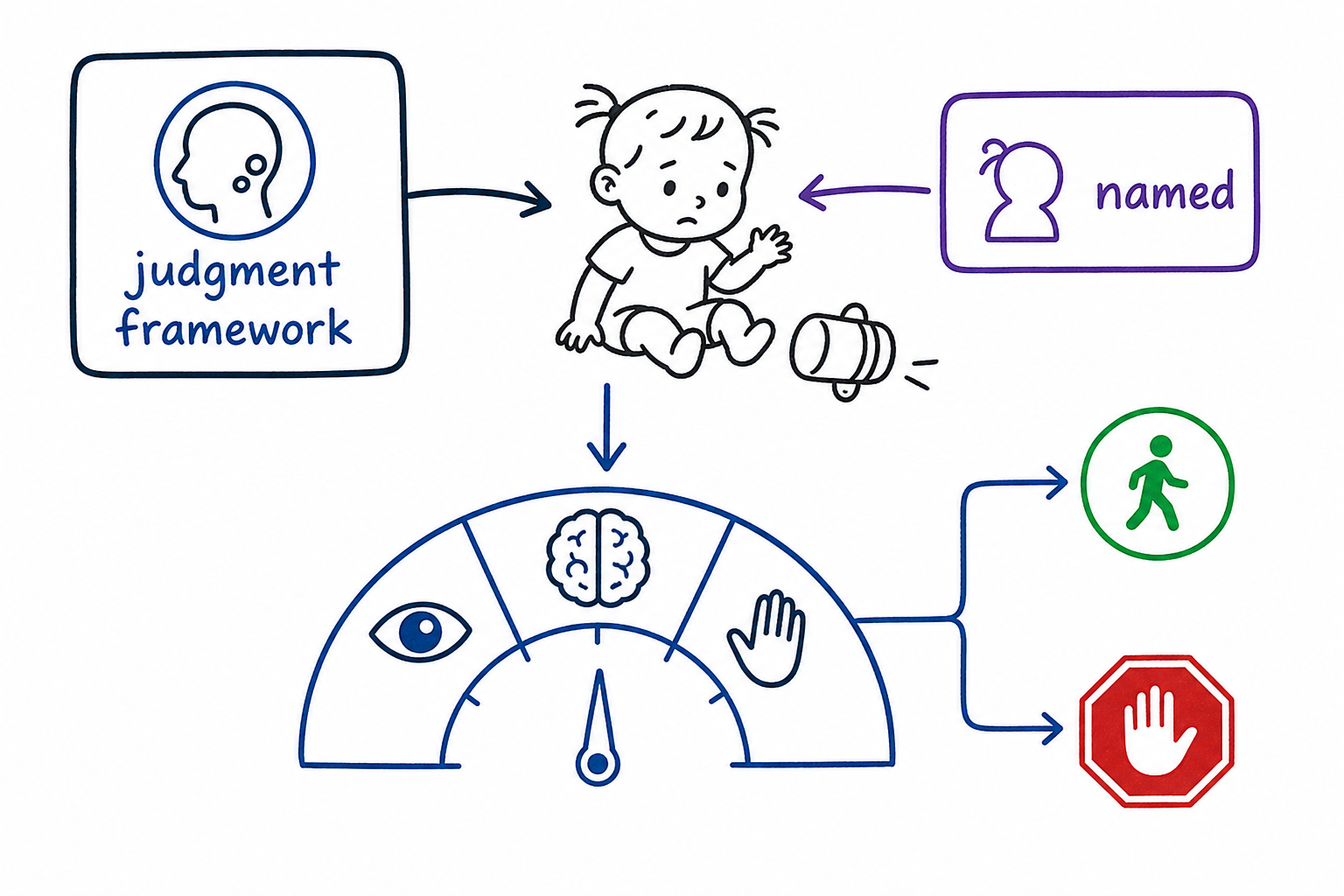
This is how NCLEX tests development: not as memorization, but as integrated nursing judgment.
Assess/Recognize cues: age, language, motor skills, developmental behaviors, caregiver concerns
Analyze cues: expected variation versus red flag
Plan/Prioritize hypotheses: safety, teaching, referral, atraumatic care
Implement/Take action: age-appropriate communication, play, family-centered care, screening referral
Evaluate outcomes: child copes appropriately, family understands teaching, delays are addressed early
NCLEX tip: First match the child’s age to the broad stage, then eliminate choices that are too advanced or too immature. Safety teaching must match the child’s mobility and behavioral stage.
Developmental theories matter because they help the nurse predict behavior and choose effective interventions. NCLEX usually tests the application of theory at the bedside.
Figure: Core developmental theories nurses actually us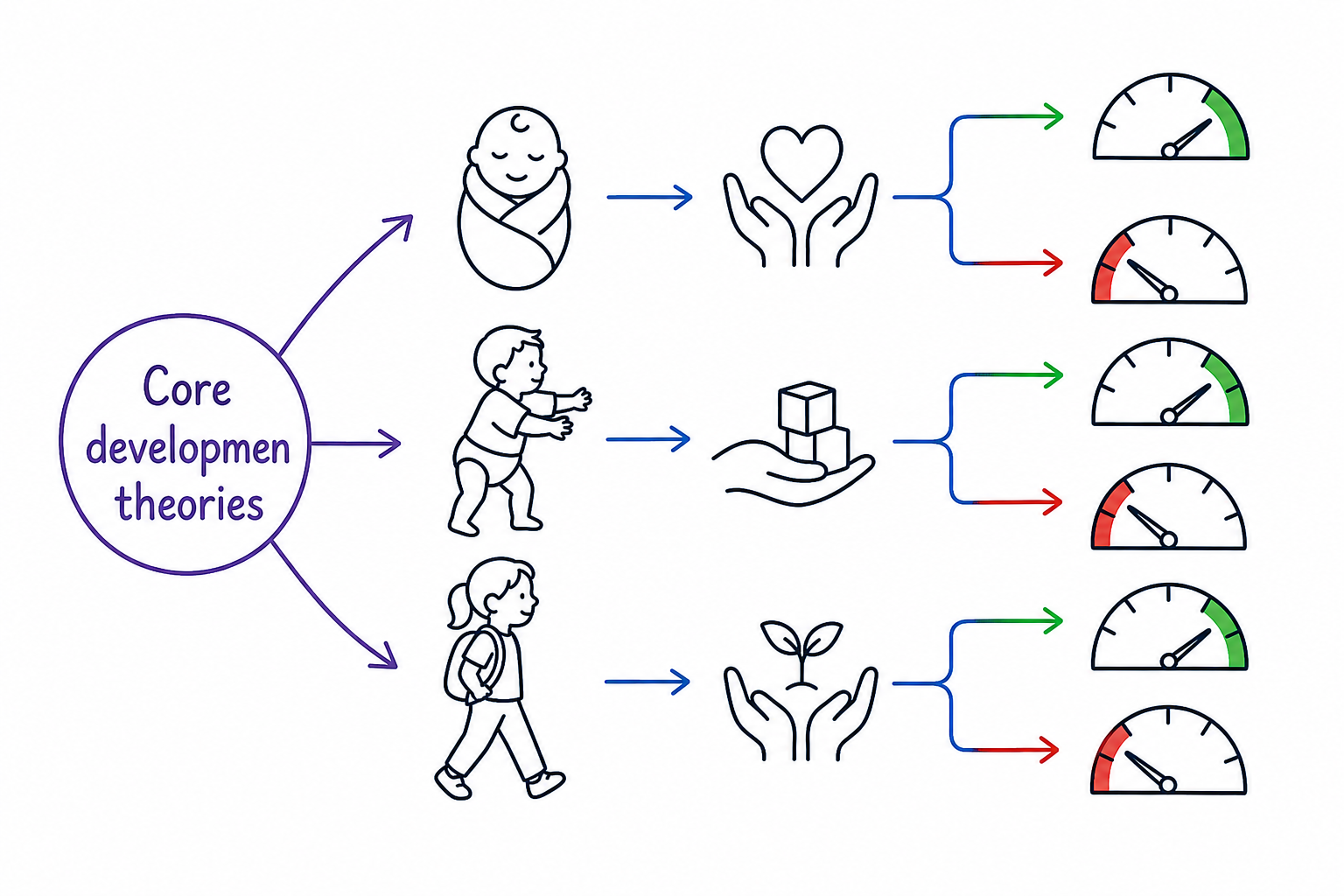
Theory | Stage | Age | NCLEX nursing meaning |
|---|---|---|---|
Erikson | Trust vs. mistrust | Birth–18 months | Consistent care builds trust; unmet needs can lead to anxiety and mistrust |
Erikson | Autonomy vs. shame & doubt | 18 months–3 years | Offer limited choices and support independence; excessive control causes shame |
Erikson | Initiative vs. guilt | 3–6 years | Encourage play and exploration; criticism may produce guilt |
Erikson | Industry vs. inferiority | 6–12 years | Support task completion and praise effort |
Erikson | Identity vs. role confusion | 12–18 years | Support privacy, autonomy, and identity formation |
Theory | Stage | Age | NCLEX nursing meaning |
|---|---|---|---|
Piaget | Sensorimotor | Birth–2 years | Learns through senses and movement; object permanence begins around 8–12 months |
Piaget | Preoperational | 2–7 years | Egocentrism, magical thinking, animism, irreversibility; use simple concrete explanations |
Piaget | Concrete operational | 7–11 years | Logical thinking about concrete events; understands rules and conservation |
Piaget | Formal operational | 12+ | Abstract and hypothetical reasoning; can discuss consequences and options |
Additional theories that may appear:
Figure: Piaget and other theory points that shape teac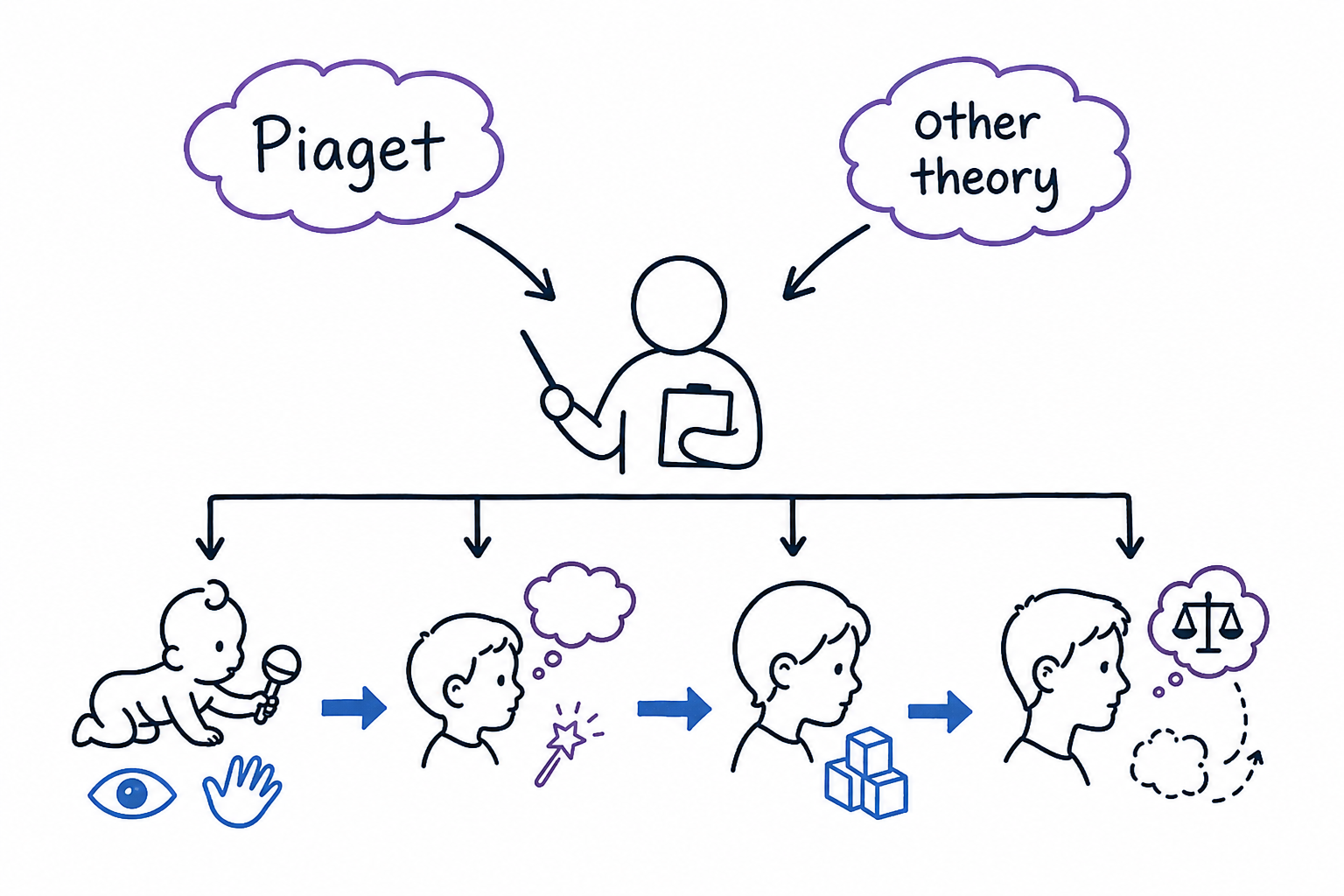
Freud psychosexual stages: Oral 0–1, Anal 1–3, Phallic 3–6, Latency 6–12, Genital 12+
Kohlberg moral development: Preconventional before age 9, Conventional from about 9 through adolescence, Postconventional typically adulthood
Key terms: Egocentrism means the child cannot see others’ perspectives. Animism means assigning life to inanimate objects. Conservation means understanding that amount stays the same even when shape changes. Reversibility means understanding actions can be mentally undone.
In Maya’s room, the nurse says, “Do you want the red cup or the blue cup?” instead of “Do you want to take your medicine?” This supports autonomy vs. shame and doubt without compromising treatment.
Figure: Key terms and a common judgment trap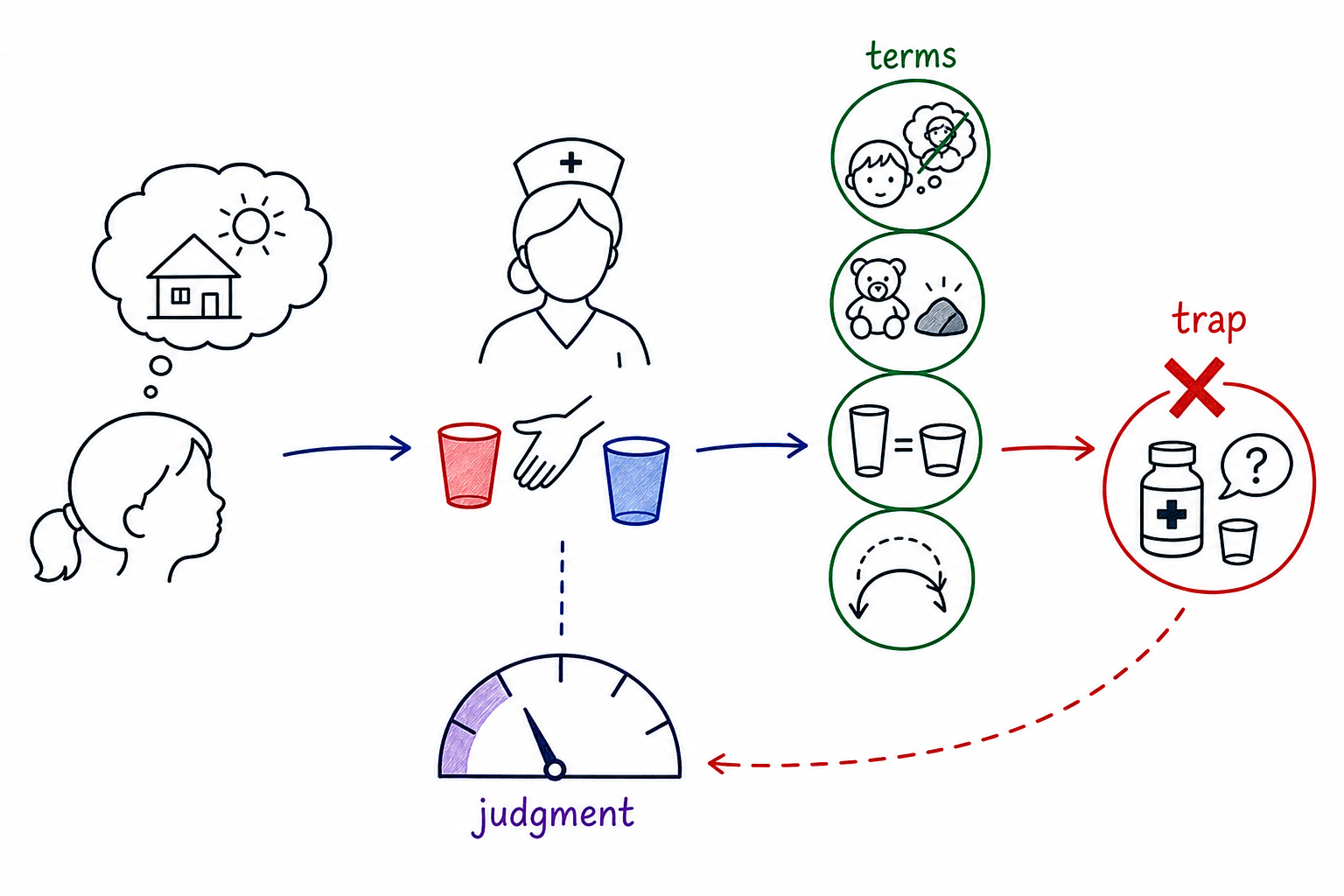
Common clinical judgment error: expecting a toddler or preschooler to think like an adult. A child in the preoperational stage may use magical thinking and believe a shot is punishment. Nursing teaching must stay simple and concrete.
Infancy covers birth–12 months. This stage is tested heavily because rapid growth, reflex integration, and attachment all occur here.
Figure: Infancy: growth and physical milestones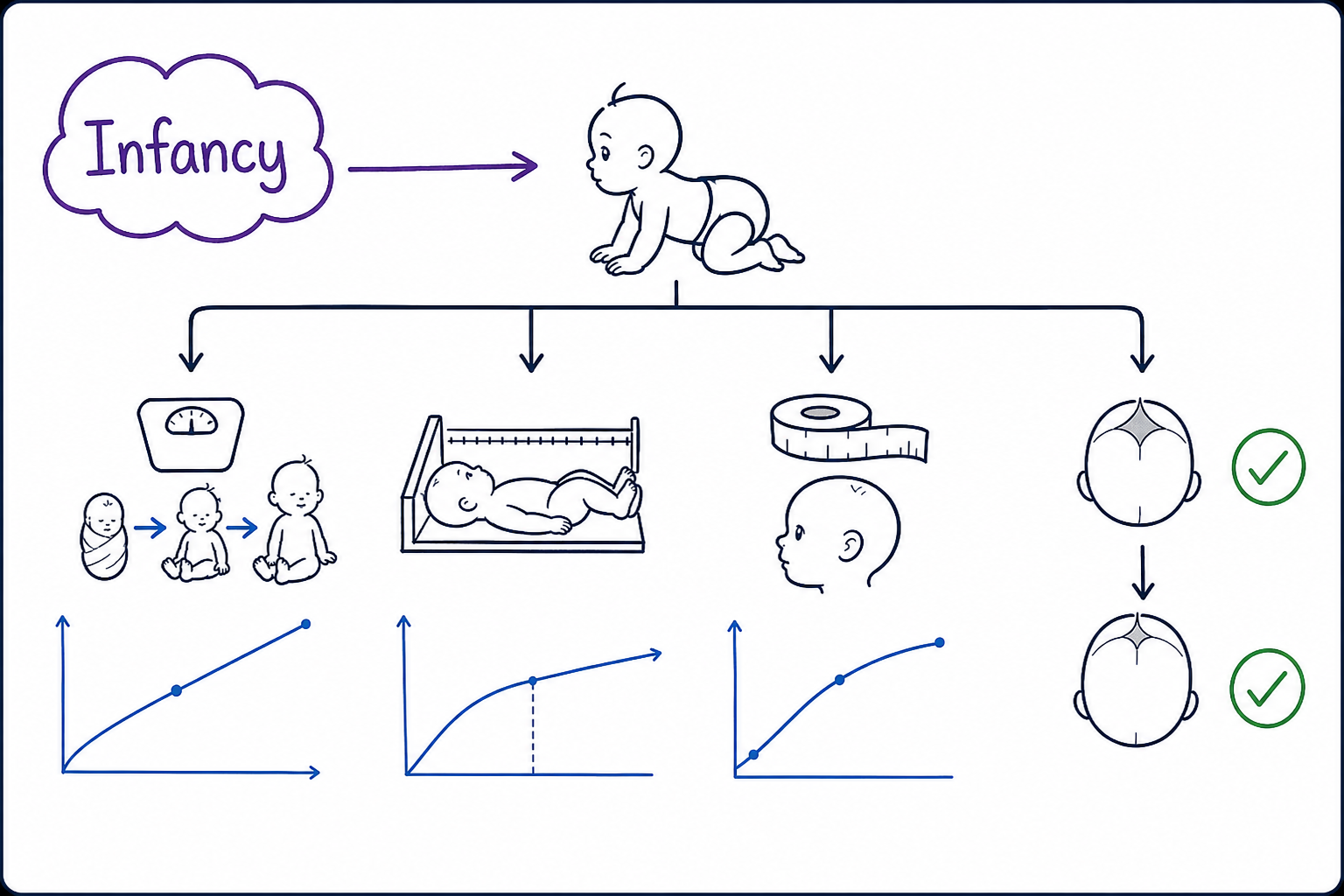
Birth weight doubles by 6 months and triples by 12 months
Length increases about 1 inch/month for the first 6 months, then about 0.5 inch/month from 6–12 months
Head circumference is about 34 cm at birth and increases about 2 cm/month for the first 3 months
Posterior fontanelle closes by 6–8 weeks
Anterior fontanelle closes by 12–18 months
Vision milestones: tracks objects by 1 month, sees color by 3–4 months, and develops binocular vision by 4 months.
Age | Expected findings |
|---|---|
1 month | Lifts head briefly, grasp reflex |
2 months | Holds head up 45°, social smile begins |
3 months | Holds head 90°, follows objects, coos |
4 months | Rolls front to back, laughs |
6 months | Sits with support, transfers objects hand to hand, babbles, stranger anxiety begins |
8 months | Sits alone, pincer grasp developing, object permanence begins |
9 months | Pulls to stand, says “mama/dada” nonspecifically |
12 months | Walks with support, uses cup, says 2–6 words with meaning |
Psychosocially, infancy matches Trust vs. mistrust and Sensorimotor. If Maya were 9 months instead of 18 months, pulling to stand and nonspecific “mama/dada” would be expected, but independent walking and meaningful multiword speech would not.
Figure: Infancy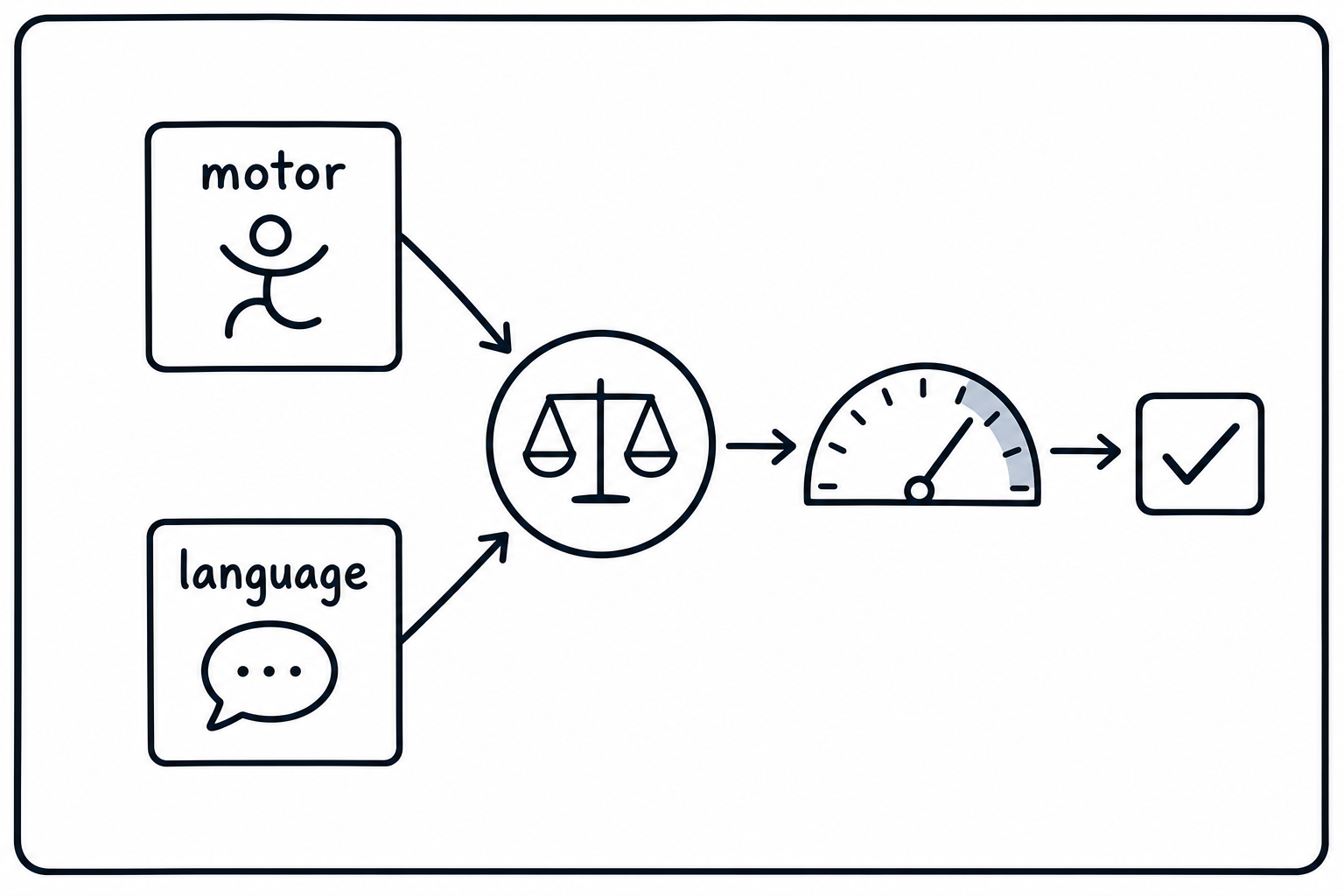
Primitive reflexes help the nurse judge neurologic development.
Figure: Infancy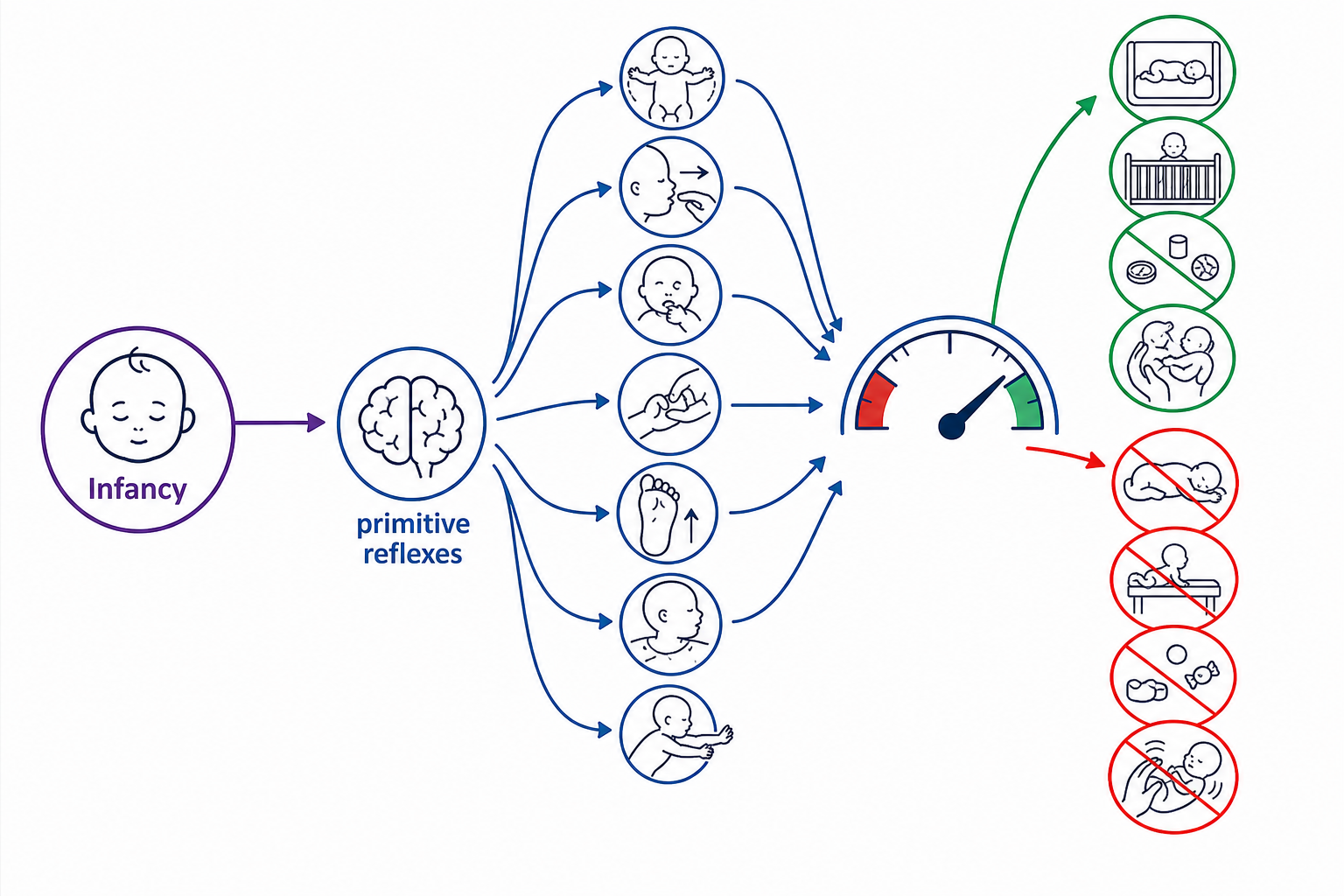
Moro: birth to 3–4 months
Rooting: birth to 3–4 months
Sucking: birth to 4 months
Palmar grasp: birth to 3–4 months
Babinski: birth to 2 years; abnormal if it persists after age 2
Tonic neck: birth to 4 months
Parachute: appears around 8–9 months, protective, persists lifelong
Priority teaching: back to sleep for SIDS prevention, never leave an infant unattended on an elevated surface, prevent choking hazards, and prevent shaken baby syndrome.
Priority trap: stranger anxiety beginning around 6 months is normal. Concern rises when expected reflexes do not integrate or major milestones are not reached.
Toddlers are 1–3 years; preschoolers are 3–6 years. Both are commonly tested because both are in Piaget’s preoperational stage, but their growth, play, language, and psychosocial needs differ.
Figure: Toddler and preschool overview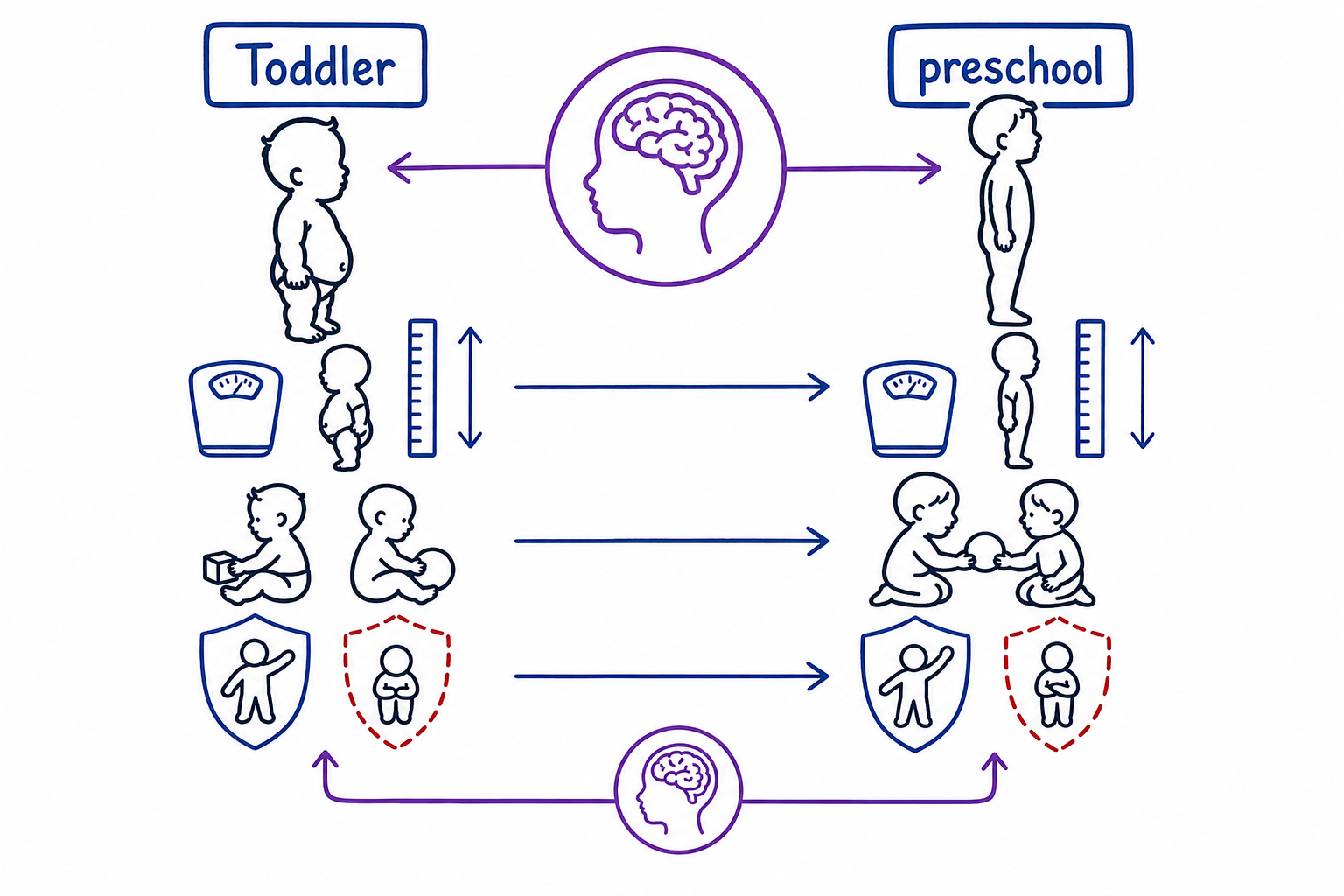
Area | Toddler | Preschool |
|---|---|---|
Growth | Gains 4–6 lb/year; grows 3 in/year; pot-belly and lordosis are normal | Grows about 2.5 in/year; gains about 5 lb/year; body becomes more adult-like |
Play | Parallel play | Associative play |
Erikson | Autonomy vs. shame & doubt | Initiative vs. guilt |
Piaget | Preoperational: egocentrism, magical thinking; preschoolers also commonly show animism, centration, and irreversibility | |
Figure: Toddler and preschool milestones nurses compar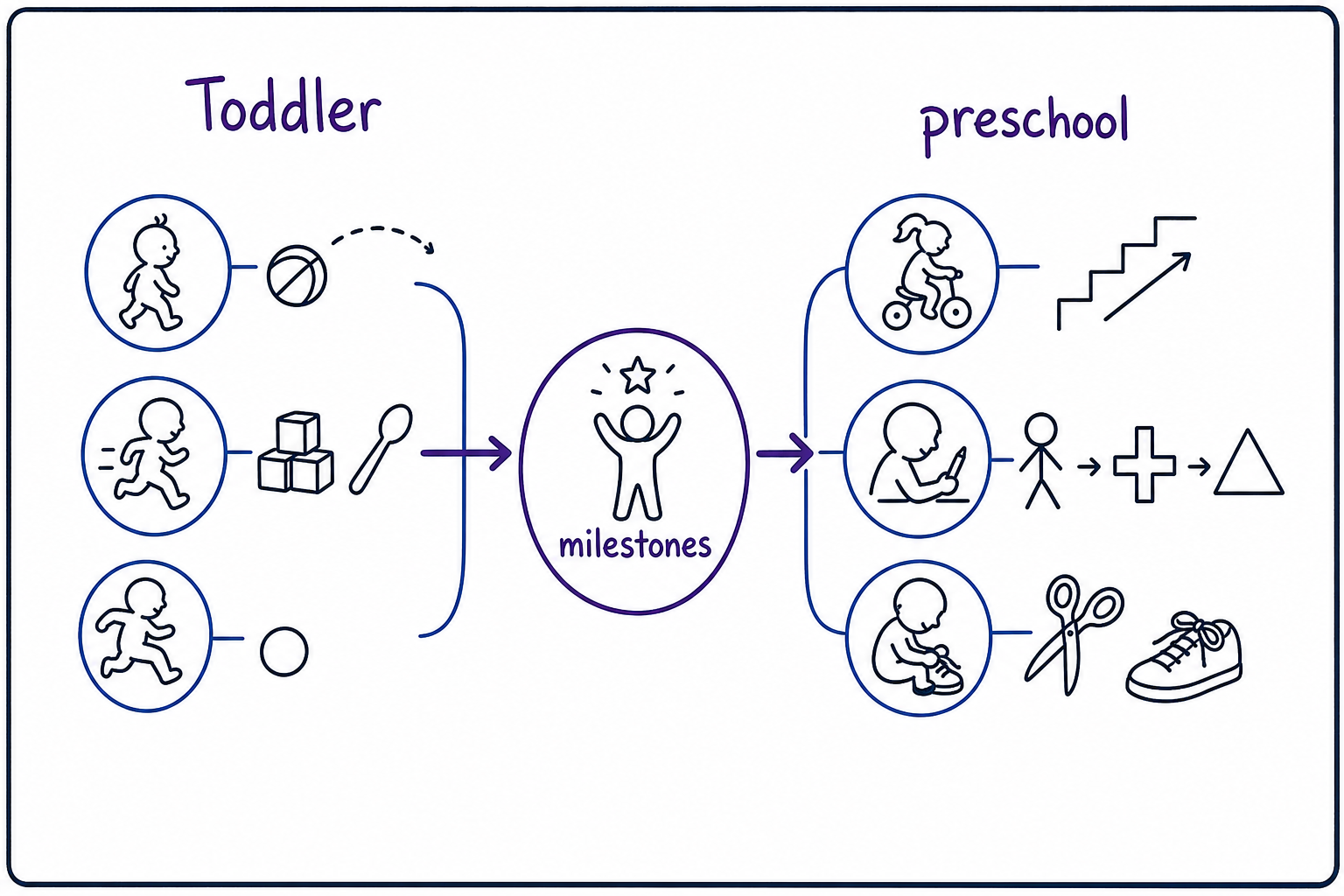
Area | Toddler | Preschool |
|---|---|---|
Motor | 12–15 months walks alone, throws ball overhand; 18 months runs, stacks 4 blocks, uses spoon; 2 years runs, kicks ball; 3 years rides tricycle, climbs stairs alternating feet | Draws person with 3 parts at age 3, copies cross at 4, copies triangle at 5, uses scissors, ties shoes by about 5–6 years |
Language | 12 months 2–6 words; 18 months 10+ words; 24 months 50+ words and 2-word phrases, about 50% intelligible; 36 months 3-word sentences, about 75% intelligible | 3 years 3-word sentences, 75% intelligible; 4 years 4-word sentences and tells stories; 5 years 5+-word sentences, 100% intelligible |
Nursing care should fit the child’s developmental level.
Figure: Nursing care, behavior expectations, and safet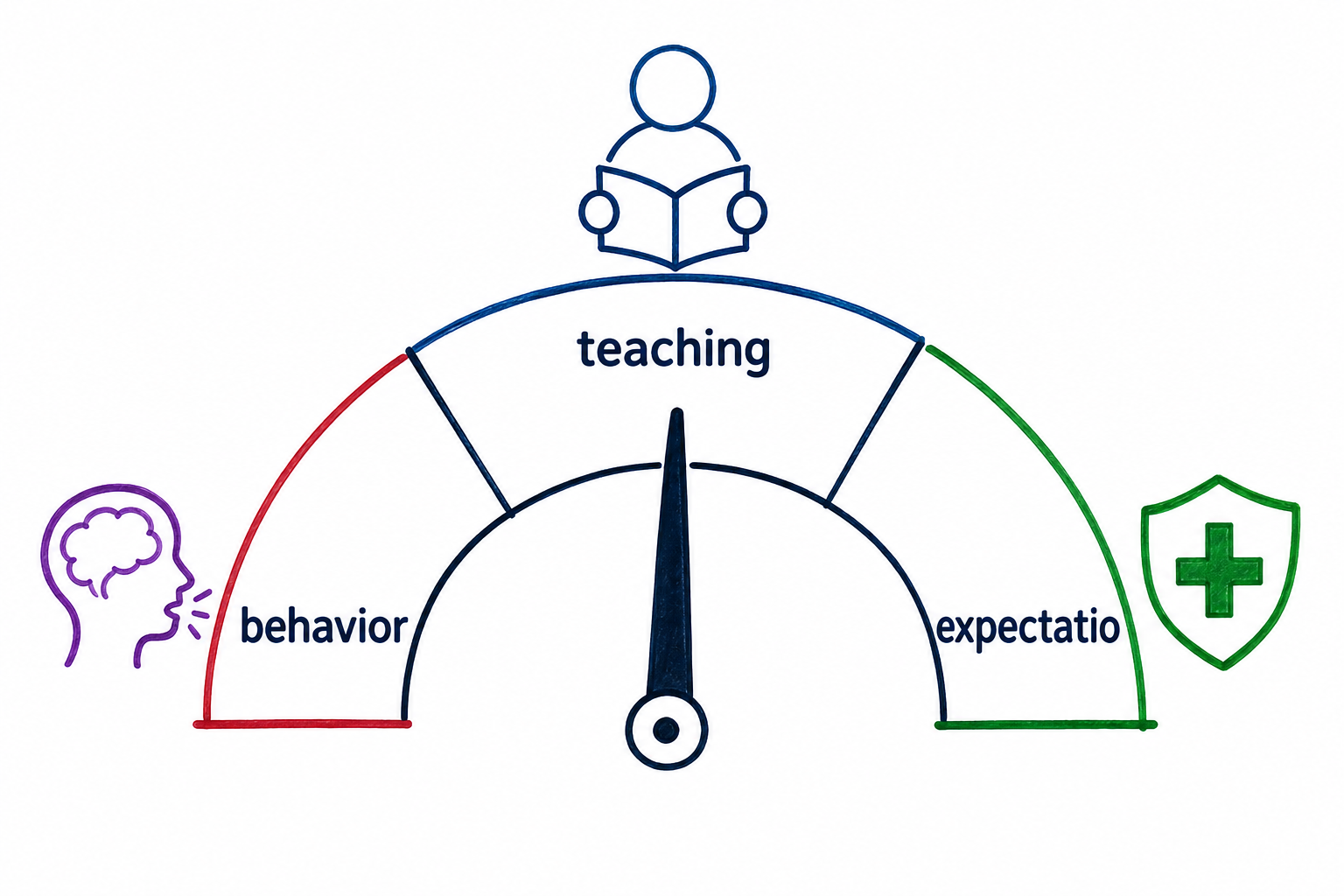
Offer limited choices to toddlers, such as which shirt to wear or which hand gets the pulse oximeter
Do not offer choices about required medications or necessary procedures
Expect temper tantrums in toddlers; set consistent limits
Use simple explanations and play for preschoolers
Avoid excessive criticism
Imaginary friends and magical thinking are normal in preschoolers
Preschool fears may include mutilation, injections, blood, the dark, monsters, and separation
Priority safety teaching:
Toddler: childproofing, poisoning risk, drowning prevention, choking hazards such as hot dogs, grapes, and nuts, falls, burns
Poison Control: 1-800-222-1222
Preschool: car seat forward-facing with harness for about 40–65 lb, water safety, fire safety including stop-drop-roll, stranger safety, helmet use
For Maya at 18 months, crying when her parent leaves is expected because separation anxiety is common from about 6 months–3 years. Throwing a cup when frustrated also fits limited emotional regulation at this age. Saying only a few words must be judged against age expectations and the full clinical picture.
Figure: Applying toddler and preschool development to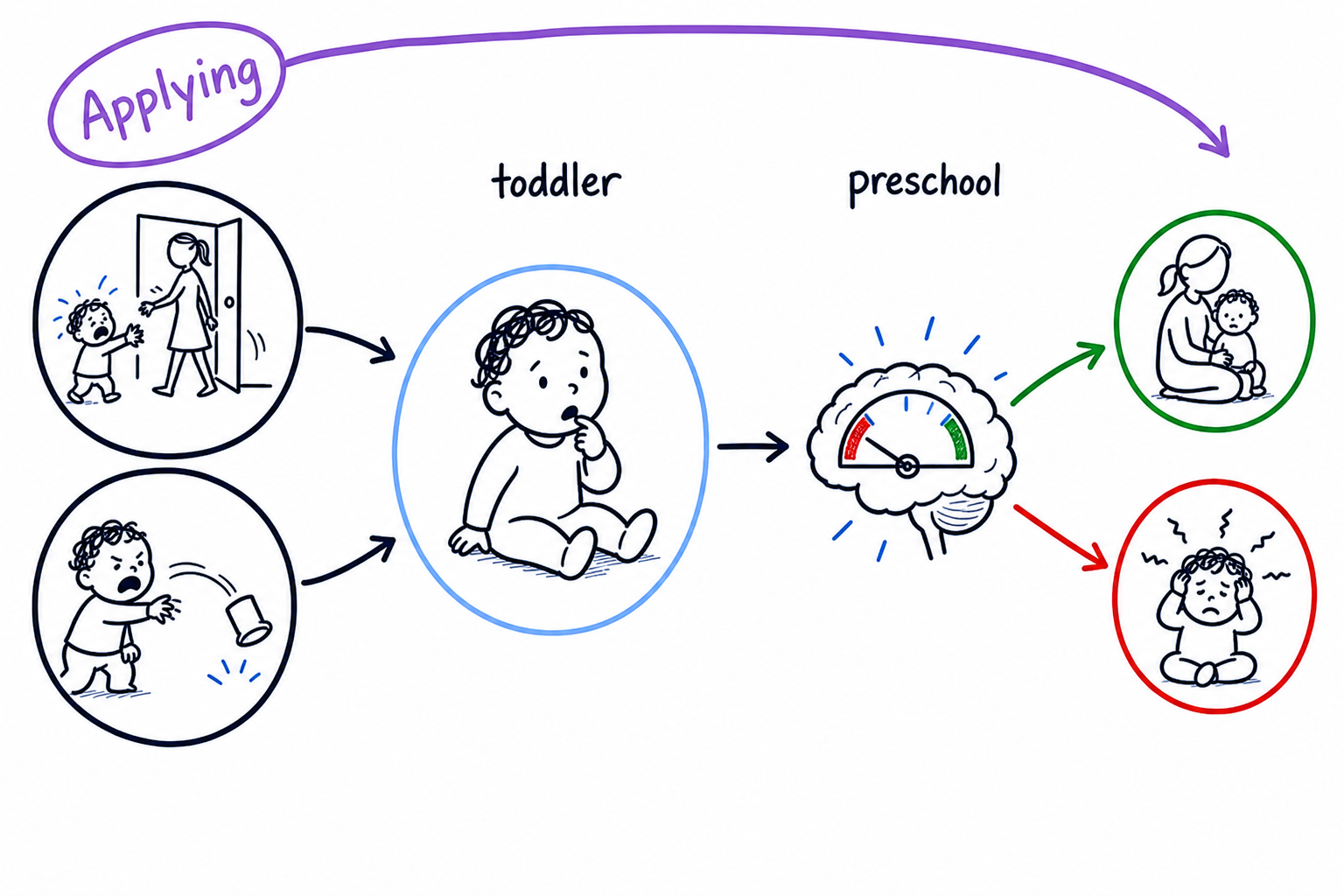
The nurse should keep routines predictable, encourage the parent to stay when possible, and use brief simple statements.
Common prioritization mistake: treating all tantrums or magical thinking as pathology. The concern is danger, regression, loss of acquired skills, or milestones far outside expected age ranges, not age-expected behavior alone.
Sign up to track progress
Create a free account to mark lessons complete, track your learning progress, and access study tools