Introduction to Chemistry and Atomic Theory
Introduction
Introduction to Chemistry and Atomic Theory
In this topic we introduce chemical formulae, and show you how these can be worked out using the valencies (or combining powers) of atoms and ions. We also introduce the chemists' fundamental counting unit, the mole, and show you how it can be used to calculate both empirical formulae and the amounts of substances that react, or are formed, during chemical reactions.
As you read through the topic, study the worked examples, and then try the 'Now try this' questions that follow them.

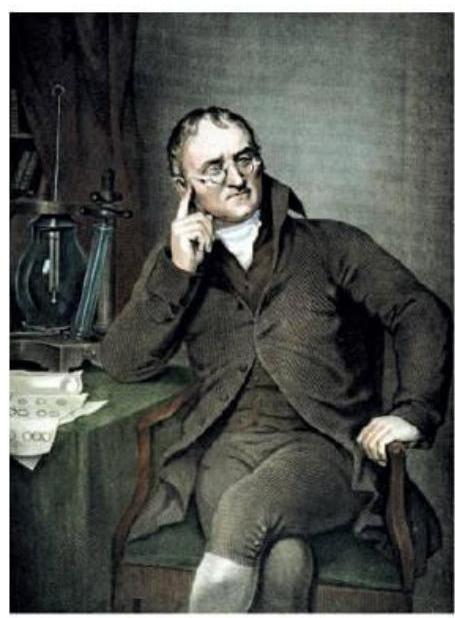
Figure 1.1 John Dalton, who first suggested the modern Atomic Theory
By the end of this topic you should be able to:
1.1a) define and use the terms relative atomic, isotopic, molecular and formula masses, based on the $^{12}\mathrm{C}$ scale
1.2a) define and use the term mole in terms of the Avogadro constant
1.4a) define and use the terms empirical and molecular formula
1.4b) calculate empirical and molecular formulae, using combustion data or composition by mass
1.5a) write and construct balanced equations
1.5b) perform calculations, including use of the mole concept, involving reacting masses (from formulae and equations), volumes of gases (e.g. in the burning of hydrocarbons), volumes and concentrations of solutions, and relate the number of significant figures in your answers to those given or asked for in the question
1.5c) deduce stoichiometric relationships from calculations such as those in 1.5b).
What is chemistry?
Chemistry is the study of the properties of matter. By matter, we mean the substances that we can see, feel, touch, taste and smell – the stuff that makes up the material world.
Passive observation forms only a small part of a chemist's interest in the world. Chemists are actively inquisitive scientists. We try to understand why matter has the properties it does, and how to modify these properties by changing one substance into another through chemical reactions.
Chemistry as a modern science began a few hundred years ago, when chemists started to relate the observations they made about the substances they were investigating to theories of the structure of matter. One of the most important of these theories was the Atomic Theory.
It is just over 200 years since John Dalton put forward his idea that all matter was composed of atoms. His theory stated that:
the atoms of different elements were different from each other
the atoms of a particular element were identical to each other
all atoms stayed the same over time and could be neither created nor destroyed
all matter was made up from a relatively small number of elements (Dalton thought about 50) combined in various ways.
Although Dalton's theory has had to be modified slightly, it is still a useful starting point for the study of chemistry.
Since that time chemists have uncovered and explained many of the world's mysteries, from working out how elements are formed within stars to discovering how our genes replicate.
On the way they have discovered thousands of new methods of converting one substance into another, and have made millions of new substances, many of which are of great economic and medical benefit to the human race (see Figure 1.2).

Figure 1.2 Some examples of the economic, medical and agricultural benefits of chemistry
Classifying matter
Chemists classify matter into one of three categories.
Elements contain just one sort of atom. Although the atoms of a particular element may differ slightly in mass (see section 2.3), they all have identical chemical reactions.
Examples of elements include:
hydrogen gas
copper metal
diamond crystals (which are carbon)
Compounds are made up from the atoms of two or more different elements, bonded together chemically.
The ratio of elements within a particular compound is fixed, and is given by its chemical formula (see page 7). The physical and chemical properties of a compound are always different from those of the elements that make it up.
Examples of compounds include:
sodium chloride (containing sodium and chlorine ions)
water (containing hydrogen and oxygen atoms)
penicillin (containing hydrogen, carbon, nitrogen, oxygen and sulfur atoms)
Mixtures consist of more than one compound or element, mixed but not chemically combined.
The components can be mixed in any proportion, and the properties of a mixture are often the sum of, or the average of, the properties of the individual components.
Examples of mixtures include:
air
sea water
alloys such as brass
Sign up to track progress
Create a free account to mark lessons complete, track your learning progress, and access study tools